U.S. HUD, Wall Street Seek to
Improve Risk Management Methods
The US Federal Housing Administration (FHA) recently proposed new regulations to further reduce risks to its single-family insurance fund.
“With FHA’s crucial role in today’s housing market, it is critically important that we are able to manage risk and to ensure that our reserves are adequate to cover future losses,” said FHA Commissioner David Stevens. Last fall Stevens announced a set of credit policy changes that will enhance FHA’s risk management function, including the hiring of a Chief Risk Officer for the first time in the agency’s 75-year history.
On Wall Street, the focus in 2010 will be putting more sophisticated risk models in place, according to John Lietchy, associate professor of marketing and statistics, Pennsylvania State University.
But Paul Wilmott, an expert in quantitative finance and previous Palisade Conference keynote speaker, cautions against too much model sophistication. "The more sophisticated your tool, the greater potential for pretending there's no risk," he says. More important is to have risk managers question existing models and apply real-world knowledge to them, Wilmott asserts.
Whatever the level of complexity, many firms are putting more money into better risk management models as financial markets improve. In fact, risk management is one of the few corners of Wall Street that is hiring these days.
Sources: NPR, Jan. 8, 2010; HUD press release, Nov. 30, 2009; Wall Street & Technology, Nov. 23, 2009
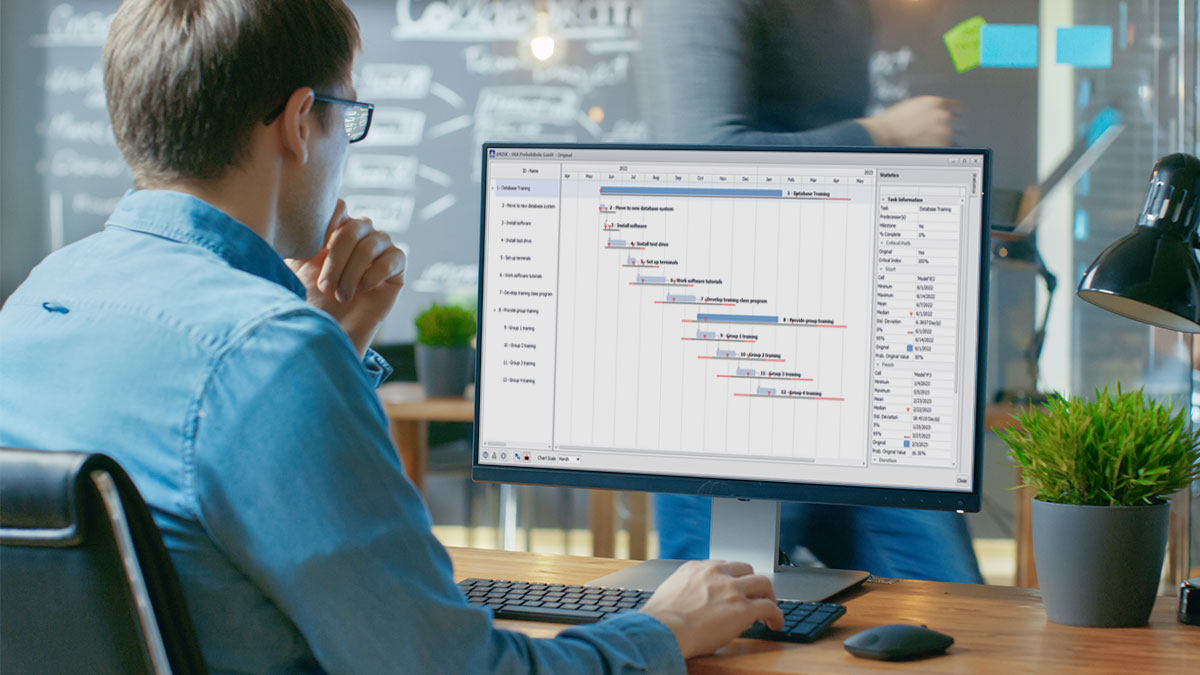
» Read about @RISK, the leading risk management tool for Excel

Join us for this one-day forum covering risk and decision analysis from all angles specific to the healthcare sector. From hands-on software training to real-world case studies presented by industry experts, you will learn new approaches to the problems you face every day. You will also see how new versions of @RISK, PrecisionTree, RISKOptimizer, TopRank, NeuralTools, StatTools, and other Palisade software tools work together to give you the most complete picture possible in your situation. Top-level consultants, industry practitioners, and Palisade experts will present to an audience of professionals from across the spectrum of business and research.
» Learn more and register

Institute of Directors, London, 14-15 April 2010
Following on from the resounding success of the last Palisade Risk Conference in London, which attracted over 110 attendees from industry and academia, the 2010 Palisade Risk Conference will be held 14-15 April. The event will be a two day forum covering a wide variety of innovative approaches to risk and decision analysis. Featuring real-world case studies from industry experts, best practices in risk and decision analysis, software training, and sneak previews of new software in the pipeline, the event is also an excellent opportunity to network with other professionals and find out how they’re using Palisade solutions to make better decisions.
» Learn more and register
Upcoming Webcasts
"Simulating the U.S. Economy: Where will we be in 100 years?"
Presented by William Strauss, President, FutureMetrics
January 28, 2010, 11:00am ET
There is an assumption of endless growth that drives all of our expectations for how our economy will be in the future. We all agree that zero or negative economic growth is bad, but we also know logically that 2% or 4% annual growth every year leads to an exponential growth outcome that is unsustainable.
To see where this growth imperative will take us, we first have to see how we got to where we are today. This free live webcast first models the 20th century. The model is a simple production function that combines capital, labor, and the useful work derived from energy to generate the output of the economy. Complexity is contained in the solutions to the internal workings of the model. What is unique is that there are no exogenous economic variables. Once the equations’ parameters are calibrated, setting the key outputs to “one” in 1900 results in their time paths very closely predicting the U.S. GDP and its key components from 1900 to 2006. The experiment in this webcast is about the future. If the model can very closely replicate the last 100 years, what does it have to say about the next 100 years?
» Register now (There is NO CHARGE for this webcast.)
"Cost-Effectiveness Analysis of Patient Care
using
The DecisionTools Suite "
Presented by Prakash Shrivastava,
Strategic Management International, Inc.
February 18, 2010, 11:00am ET
Cost-effectiveness analysis is often used to evaluate effectiveness of medical interventions and is one of the main topics in healthcare research. This analysis requires data evaluation, including building and testing decision analysis models. This free live webcast will illustrate how such models are easily built using the DecisionTools Suite. The first part of the webcast will introduce process, cost drivers and measures in healthcare. In the second part, cost-analysis examples will be presented. The webcast will conclude with a sensitivity analysis example.
» Register now (There is NO CHARGE for this webcast.)
"Use of @RISK for Probabilistic Decision Analysis of a
Manufacturing Forecast in an Environment of High Uncertainty"
Presented by Dr. Jose A. Briones, SpyroTek Performance Solutions
March 11, 2010, 11:00am ET
Profitability projections in a manufacturing environment are directly tied to how the sales forecast fits with the capability of the operation. When a company has a large portfolio of products with very different operational production rates, the manufacturing capacity of the plant will be significantly impacted by the product mix to be produced. This in turn will have a radical effect on the output of the plant and the allocation of the fixed cost of production. In this case we present an example where a company is trying to decide how best to balance the sales of certain families of products to maximize revenue, maintain a diverse product line, and properly price each individual product based on the impact to the manufacturing schedule and fixed cost allocation.
» Register now (There is NO CHARGE for this webcast.)
Palisade Blog Headlines
Data Issues
Tuesday, January 12, 2010
In this 3-part series, Rishi Prabhakar explores some of issues that a risk management professional comes up against when fitting distributions to historical data. Looking at examples from workplace experience in addition to issues that come up during risk analysis trainings that he conducts, Rishi emphasizes the importance of the collection and intelligent use of historical data for effective and useful risk analysis and management.
» Part 1
» Part 2
» Part 3
Predicting Customer Will
Tuesday, January 12, 2010
If hindsight is twenty-twenty, foresight—at least in the world of market research—still has a ways to go. Simulation, both with Monte Carlo software and with a conjoint simulation approach, has been used by market researchers for some time now. Recently David G. Bakken, who maintains a blog on the Smart Data Collective site, pointed out that the drawback of these models is that even those that incorporate random number generation are static. That is, the inputs and the coefficients determine the model outcomes...

» Read more
Subscribe to the Palisade blogs.

Capitalizing Upon Market Inequities: A Game Plan for Successful Sports Wagering
Presented by by Dr. Clayton Graham, DePaul University at the
2009 Palisade Conference in NYC, October 21, 2009
Sports wagering brings two separate “markets” together. First is the production market or the game itself. The second is the wagering or betting market. As a matter of practicality, the wagering market is itself in balance, i.e., bet clearing is covered through the process of adjusting the cost-payout ratio (the line). Betting lines are translated into an expected probability of winning. This resultant probability is frequently inconsistent with the probability of the team actually winning. Hence, the opportunity to capitalize upon the dichotomy between the inequities of the production and gaming markets can be detailed and quantified.
Principal Palisade software utilized includes: StatTools, @RISK and Evolver.
» View the full abstract and download the presentation

Correlation of Input Variables
This example demonstrates the use of the Corrmat function to correlate multiple @RISK distributions. The distributions are correlated using a matrix of coefficients that specify the relationship between each pair of functions. The coefficients must be between -1 and +1, with a value of +1 indicating a perfect correlation, 0 indicating no correlation, and -1 indicating a perfect negative correlation. In this example three variables, the current US interest rate, the Pound/$ exchange rate, and the Euro/$ exchange rate, are correlated using a 3x3 matrix. Correlation matrix inconsistency occurs when a matrix that is mathematically impossible to realize is entered. If this happens, @RISK will try to adjust your matrix. However, you may have some correlation coefficients that you do not wish to be adjusted, while others are more or less free to be changed. This information may be entered using an adjustment weight matrix.
Download the example: CorrmatWithAdjustmentWeightMatrix.xls
Building and Construction
Designing Tomorrow's Greener Buildings
Technique: Decision analysis » see DecisionTools Suite 5.5
Source: Process & Control Today, January 25, 2010
British funding for new design and quantitative decision tools will help construction companies build with green technologies.
Investing
Controlling Trade Risk with Position Sizing
Technique: Monte Carlo Simulation » see @RISK 5.5
Source: Trading Markets, January 25, 2010
A “pullback strategy” based on Monte Carlo simulation can guide investors away from undue risk exposure in equity trading.
Medicine
Reality Checkup: Medical Artificial Intelligence Still a Hard Sell...

Technique: Neural Networks » see NeuralTools 5.5
Source: Scientific American, January 12, 2010
AI researchers aim to improve software usability in order to bring down obstacles to integrating medical records. |